One of the most common things we hear from customers who come to us mid-project is: “I didn’t know I needed that.” They have ordered their boards, booked their installer, and started cutting, only to discover they are missing cam locks, shelf pins, or the right hinge overlay type. Good hardware supplies planning eliminates that problem entirely. This checklist covers everything a cabinet or furniture project needs — and the questions to ask before you buy a single piece of it.
Specialist vs. Generalist Hardware Supplies: Why the Difference Matters More Than Price
Walk into a big-box hardware store and you will find handles, hinges, and runners. Walk into a specialist cabinet hardware supplier and you will find the full picture — brand-specific products, correct specifications, and someone who can tell you why one hinge works for your application and another does not.
Here is what actually separates a specialist supplier from a generalist:
- Range depth. A generalist stocks a handful of popular SKUs. A specialist stocks the full range — soft-close, push-to-open, undermount, side-mount, multiple overlay types, multiple load ratings.
- Brand quality. Brands like Hafele, Blum, Hettich, and Grass engineer their hardware to exact cycle-test standards. Generic alternatives may look similar but are rarely built to the same tolerances.
- Technical advice. Knowing that you need a 35 mm cup concealed hinge is one thing. Knowing whether you need full overlay, half overlay, or inset — and what your cabinet construction demands — is a different conversation entirely.
- Trade pricing without the runaround. At Hardware Heaven, we supply cabinetmakers, joiners, and serious renovators at honest trade-smart pricing. You do not need a trade account to access the range.
The cost difference between a specialist supplier and a big-box retailer is often smaller than people expect. The product quality difference is not.

The Complete Cabinet Project Hardware Checklist
This is the list we wish every customer had before they started. Tick off every category before you buy — and before you start cutting.
Structural and joining hardware:
- Cam locks and dowels for flat-pack panel construction
- Euro screws and confirmat screws for carcass assembly
- Shelf pins and shelf supports for adjustable shelving
- Cabinet legs and adjustable plinth feet
Browse our Catches and Connectors, Cabinet Legs, and Fasteners ranges for the full selection.
Door hardware:
- Concealed hinges — specify overlay type (full, half, or inset) before ordering. Our Hafele hinge range and PHS Hinges cover both soft-close and standard options.
- Door dampers and soft-close add-ons for existing hinges
- Bi-fold door fittings for laundry and wardrobe applications — see our BI Fold Door Fittings range
- Door stays and gas lift supports for overhead lift doors — browse our Gas Lift and Door Stay options
Drawer hardware:
- Ball-bearing drawer runners (side-mount or undermount, soft-close or push-to-open)
- Drawer box systems if doing a full renovation — the Hafele Matrix Box and Hafele Alto Slim Box are trade standards for consistent results
- Drawer locks for office, commercial, or secure storage applications
Browse the full Drawer Box and Runners range here.
Decorative and finishing hardware:
- Handles and knobs — bar pulls, cup pulls, integrated profiles, or knobs depending on style and application. See our full Handles and Knobs range.
- Aluminium kitchen profiles for handleless integrated designs
- Hinge hole covers, trim caps, and screw covers — the finishing details that make a built piece look professional rather than homemade. Browse our Covers and Caps range.
Edge and board finishing:
- ABS edging (pre-glued or unglued) to match board colour and thickness
- Silicone sealant and construction adhesive for panel joining
Explore our Edging range before you finalise your board order.
Internal storage and kitchen fittings:
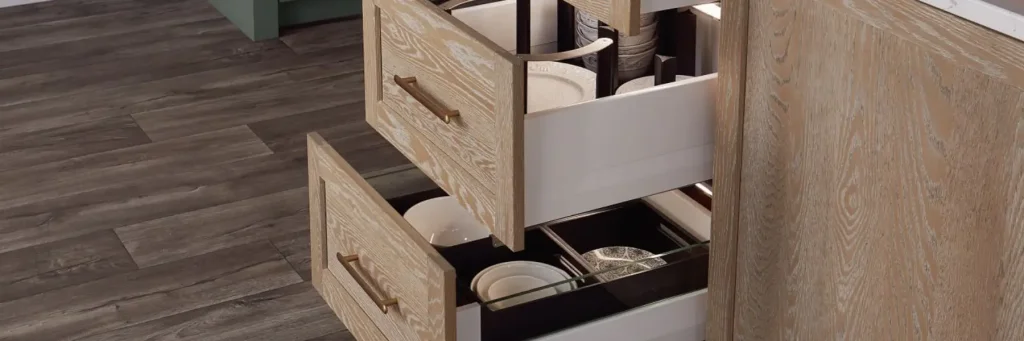
- Pull-out pantry units, tandem pantries, pull-down systems, and pull-out baskets — all specified before cabinetry is built, not after. Browse the Kitchen and Living Solutions range and Base Storage Units for layout-specific options.
Missing any one of these categories mid-build means a delayed project, emergency freight costs, and an installer standing around waiting. The checklist exists precisely to prevent that.
How to Read Quality: What Load Ratings and Cycle Tests Actually Tell You
When a customer asks us why one drawer runner costs more than another, the answer is almost always in three places: the load rating, the cycle test result, and the brand behind it.
Here is what those numbers mean in practice:
- Load rating. Drawer runners are rated in kilograms per pair. A 25 kg runner handles light domestic drawers. A 45 kg or 70 kg runner is built for pan drawers, deep storage drawers, and commercial applications. Using an undersized runner in a heavy-use drawer is one of the most common reasons cabinets fail within a few years.
- Cycle test rating. Premium brands like Blum and Hafele publish the number of open-close cycles their products are tested to — often 50,000 to 100,000 cycles for soft-close runners. In a kitchen drawer opened twice a day, 50,000 cycles represents nearly 70 years of use.
- Brand certifications. Blum, Hettich, Hafele, and Grass all manufacture to international quality standards and publish technical data sheets for their products. If a supplier cannot provide a data sheet, that tells you something about the product.
The practical takeaway: match the hardware rating to the application load. Do not use a domestic-rated runner in a workshop drawer, and do not overspend on a heavy-duty commercial runner for a light overhead cabinet.
What we see consistently across our Melbourne trade customers is that hardware specification is where quality separates itself from average. A cabinetmaker who specs Hafele or Blum runners does not get callbacks about wobbly drawers. One who cuts corners on hardware often does. The cycle rating and load rating on the box are not marketing figures — they are the reason one product lasts a decade and another needs replacing in three years.
Furniture Hardware vs. Cabinet Hardware: Shopping the Right Category
This is an area where we see a lot of confusion, particularly from customers doing their first furniture build alongside a kitchen renovation. Cabinet hardware and furniture hardware are related but distinct categories.
Cabinet hardware is designed for fixed, built-in cabinetry — kitchen units, bathroom vanities, laundry cupboards, and wardrobes. The key characteristics are:
- Designed for repeated daily use across thousands of cycles
- Specified by overlay type, cup size, and load rating
- Soft-close and push-to-open mechanisms are standard upgrades
Furniture hardware covers freestanding and knocked-down furniture — bed frames, dining tables, bookshelves, and custom storage pieces. The key characteristics are:
- Connectors (cam locks, RTA bolts, barrel nuts) designed for flat-pack assembly and disassembly
- Table leg fittings, furniture feet, and castors rated for floor contact and load distribution
- Shelf supports and pins for adjustable shelving in bookcases and display units
- Bed rail fittings and mattress support hardware designed for flex and movement rather than rigidity
The distinction matters when you are buying, because ordering a kitchen hinge for a wardrobe door is a completely different spec to ordering a bi-fold fitting for the same door. If you are unsure which category your project falls into, describe your application to our team at Hardware Heaven and we will point you to the right range.
How to Calculate Quantities Before You Buy
This is where a lot of first-time buyers either underestimate or over-order. Here is the framework we use with every customer:
Hinges:
- Most cabinet doors up to 1,000 mm high need 2 hinges.
- Doors between 1,000 mm and 1,500 mm high need 3 hinges.
- Doors over 1,500 mm (tall pantry doors) need 3 to 4 hinges depending on weight.
- Always add 10 per cent for breakage and future replacements.
Drawer runners:
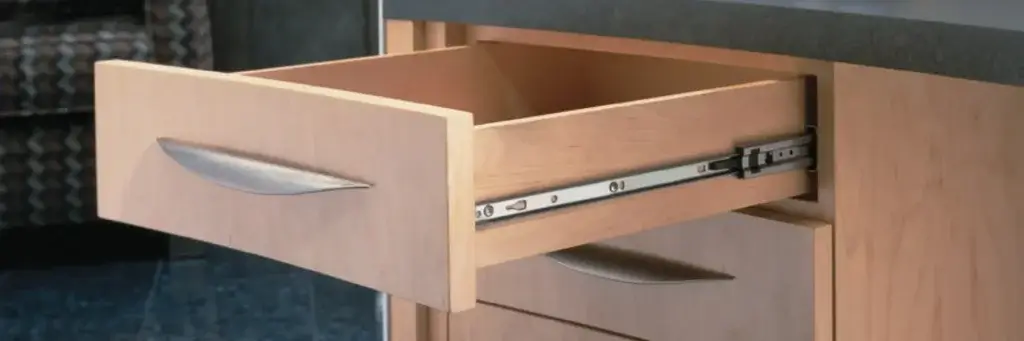
- One pair of runners per drawer, ordered in the correct length (runner length should be 10 to 20 mm shorter than cabinet depth).
- Confirm load rating against what the drawer will carry — do not guess.
Handles:
- One handle or knob per door. One handle per drawer front. Add 10 per cent buffer.
- For integrated aluminium profiles on handleless designs, measure in running metres, not units.
Cam locks and dowels:
- For flat-pack carcass assembly, a standard two-panel join uses 2 cam locks and 2 dowels.
- A base cabinet with 4 panels typically needs 8 to 12 cam locks depending on design.
Shelf pins:
- Most adjustable shelving designs use 4 pins per shelf. Count your total shelf positions and multiply.
Edge banding:
- Calculate total linear metres of exposed board edges. Add 15 per cent for cuts and waste.
If your project involves a full kitchen or multiple furniture pieces, bring your cut list to us. We will help you calculate quantities before you order, and we will flag anything missing before you are on site wondering why something does not fit.
Check our current promotions for bundle pricing on high-quantity orders before you finalise your list.
Frequently Asked Questions
1. What hardware supplies do I need for a flat-pack kitchen cabinet build?
You will need cam locks, dowels, concealed hinges, drawer runners, shelf pins, handles, edge banding, and construction adhesive. Specify overlay type and load ratings before ordering to avoid mid-project returns.
2. What is the difference between furniture hardware and cabinet hardware?
Cabinet hardware is designed for fixed, built-in cabinetry with repeated daily use. Furniture hardware covers flat-pack connectors, table fittings, bed rails, and shelf supports for freestanding pieces. Each category has distinct specifications.
3. How many hinges does a cabinet door need?
Doors up to 1,000 mm high need 2 hinges. Doors between 1,000 mm and 1,500 mm need 3. Tall pantry doors over 1,500 mm typically require 3 to 4 hinges depending on door weight and material.