
Measure each side of a cabinet separately and there are two chances for the runners to end up at slightly different heights. If you want to know how to install drawer slides without a jig and still get drawers that glide, the spacer method takes that risk away. Let a pair of offcuts do the measuring for you.
It works whether you’re fitting out a run of kitchen drawers for a client or adding storage to a laundry in a newer home around Tarneit or Point Cook.
The short version: how to install drawer slides in four steps
If you just want the gist, here it is:
- Separate the runner into its cabinet member and drawer member, following its fitting instructions, then cut two spacer blocks the same thickness.
- Fix the cabinet members sitting on the spacers, so both sides end up at exactly the same height.
- Fix the drawer members to the drawer sides, making sure left goes on left and right goes on right.
- Click the drawer in and test it. If it binds, adjust before you replace anything.
The rest of this guide walks through each step properly.
What you need before installing drawer slides
You don’t need anything fancy:
- Tape measure
- Drill and driver, with the right bits for your screws
- A square
- Pencil
- Two offcuts of the same thickness for spacers
- The runners, plus the fitting instructions that came with them
Don’t skip that last one. Check the instructions for the gap the runner needs between the drawer and the cabinet side, and the load it is rated for. Go by those figures for the runner in your hand, rather than one you remember from a previous job.
If you’re still choosing, start with our drawer runners and slides range. Planning a bigger fit-out? Run through the hardware supplies checklist first, so nothing holds you up mid-job.
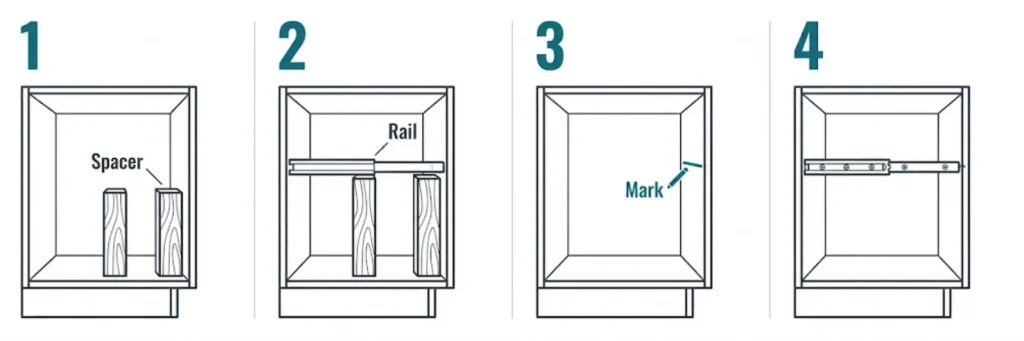
Step 1: separate the members and mark the height with spacer blocks
If your runners come as one piece, they will separate into a cabinet member and a drawer member. Follow the fitting instructions to take them apart.
Now the spacer trick:
- Decide where the bottom of the runner needs to sit in the cabinet.
- Cut two offcuts to that exact height. Same board, same cut, so they match.
- Stand one spacer against each cabinet side.
Use the same pair of spacers for both sides. That is the whole point: the runners can only end up at the same height if they sit on identical blocks.
Step 2: fix the cabinet rails level and parallel
Rest the cabinet member on the spacer and hold it against the cabinet side.
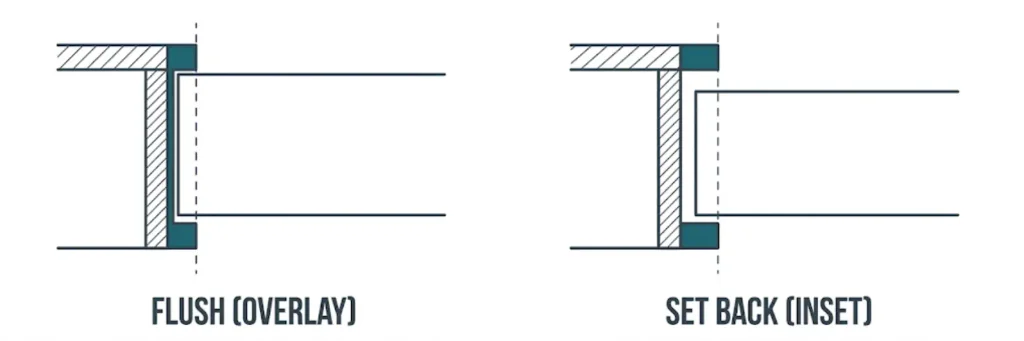
The setback is the next thing to get right:
- Overlay drawers (the drawer front covers the cabinet edge): fit the runner flush with the front edge of the cabinet.
- Inset drawers (the front sits inside the cabinet opening): set the runner back so the drawer front finishes flush. The runner’s fitting instructions give the setback.
Check the runner is square to the front edge, then fix it. If it has slotted holes, use those first, as they leave room to adjust later. Repeat on the other side with the same spacer, then step back and sight along both runners to check they look parallel.
Step 3: fix the drawer members (left and right are not interchangeable)
This one is easy to get wrong. Some drawer members are handed, meaning the left one only works on the left. Check the markings on the runner or its instructions before you drive a screw.
To fit them:
- Line the drawer member up along the drawer side, parallel with the bottom edge.
- Keep the front of the member consistent with how you set the cabinet rails, so the drawer front lands where you want it.
- If there are slotted holes, fix through those first, as before.
Fit both sides the same way, measuring from the same edge each time.
Step 4: click in, test, and fix a drawer that binds
Pull both cabinet members out to full extension. Line the drawer members up with them and push the drawer in gently until you feel it click home.
Now test it:
- Open and close it a few times. It should run smoothly the whole way.
- Check the front sits evenly with its neighbours.
- If it’s soft-close, let it close on its own and check it pulls in properly.
If the drawer binds or sticks, treat it as an alignment problem first:
- Loosen the screws in the slotted holes on one side.
- Reseat the runner, check it against the spacer again, and retighten.
- Test again before you change anything else.
Once it runs well, finish fixing the runners as the instructions show. If they have round holes as well as slots, add screws there to lock everything in place.
Choosing the right runners
A few options from our range, depending on the job:
- Soft close ball bearing runners (PHS)
- Soft close ball bearing runners (Hafele)
- Full extension soft close runners, 300mm
Whichever you choose, match the runner length to the depth of your drawer, and check the load rating on the product page before you fill the drawer. Heavy pots and pans are a very different job from tea towels.
If you’re buying runners regularly for jobs, our trade account page explains how a trade account works. You can also drop into our Truganina trade counter if you want to see the options before you buy.
FAQs
How much gap should I leave between the drawer and the cabinet?
Leave the gap the runner’s spec sheet states, not a rule of thumb. It varies between runners, so check before you build the drawer box.
How do I install drawer runners so both sides are level?
Use one pair of matching spacer blocks for both sides. If each runner sits on identical blocks, they end up at the same height without you measuring twice.
Can I swap roller runners for ball-bearing runners?
Check before you buy. Compare the gap the new runner needs, from its spec sheet, with the space your drawer has.
How do I put a drawer back on its runners?
Pull both cabinet members out to full extension, line up the drawer members, and push the drawer in gently until it clicks. If it won’t seat, check the runner’s fitting instructions and try again.
Why does my drawer only open part of the way?
The runner may be too short for the drawer. Match runner length to drawer depth, or you lose extension.
Tips
- Cut both spacers from the same offcut in one go, so they are guaranteed to match.
- If your runners have slotted holes, fix through those first. It leaves you room to adjust.
- Treat a binding drawer as an alignment problem first. Loosen and reseat before you replace anything.
- Keep the fitting instructions with the job until the drawers are finished.


