You have spent thousands on a new kitchen. The benchtops look great, the cabinetry is spot on, and then you stand at the bench after sunset and realise you are chopping onions in your own shadow. That is the problem under cabinet lighting fixes. Not the stick-on battery pucks you see in rental hacks on Instagram, but proper LED strip, aluminium profiles, and a driver that a cabinetmaker or electrician would actually install. This guide covers the trade-supplier approach: where the light goes, which parts you need, and how to get it right first time.
What WPC Actually Is
WPC stands for wood plastic composite. It is a manufactured board made from a blend of wood fibre (or wood flour) and a polymer binder, usually PVC or polyethylene. The result is a rigid panel that looks and feels similar to timber but behaves more like a plastic in terms of moisture and pest resistance.
The WPC wall sheets stocked by Hardware Heaven, for example, come in 2750 x 1220 x 8mm click-lock sheets. They install without glue or nails, and they are available in a range of timber-look finishes that replicate everything from light oak to walnut.
WPC is not new, but it has improved a lot in the last few years. Modern wood plastic composite wall panels have better UV stability, more realistic textures, and a click-lock system that makes installation genuinely quick.
Where Timber Still Wins
Timber is not going anywhere, and for good reason. There are places where real wood is still the better choice:
- Grain and character – no composite can perfectly replicate the depth and variation of natural timber grain. Every board is unique. If you are after that one-of-a-kind look, timber delivers it.
- Acoustic warmth – solid timber panels absorb and diffuse sound differently to composites. In a living room, study or bedroom where acoustics matter, timber adds warmth that WPC does not quite match.
- Heritage and restoration – if you are working on a heritage home or a period renovation, natural timber is often a requirement, not just a preference.
For feature walls in a living room or a bedroom where moisture is not a concern, timber can still be the right call.
Where WPC Wins Inside an Australian Home
This is where things shift. In the rooms and conditions where Australian homes take the most punishment, WPC interior wall panels outperform timber on almost every practical measure:
- Wet areas – laundries, bathrooms, kitchen splashbacks. WPC does not absorb moisture, so it will not swell, warp or grow mould.
- High-humidity rooms – even in rooms that are not directly wet, Melbourne’s winter humidity can cause timber to expand and contract. WPC stays dimensionally stable.
- Low-maintenance walls – WPC wipes clean with a damp cloth. No oiling, no sealing, no sanding, no refinishing.
- Termite-proof zones – WPC contains no cellulose that termites can feed on. Timber does.
The H-Line 8mm WPC Wall Sheet is a popular choice for laundry and kitchen feature walls. It gives you the timber look without the timber maintenance.
Moisture, Mould and Termites: The Australian Climate Test
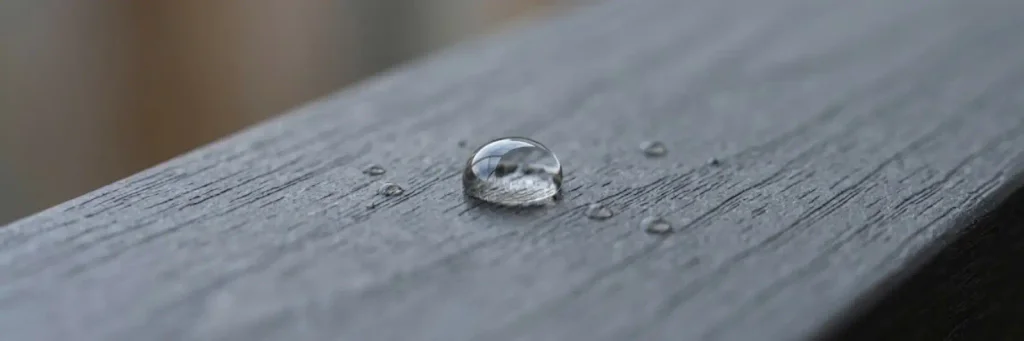
Australia is hard on building materials. Here is how the two stack up:
Moisture: Timber absorbs water. Even sealed timber will eventually take on moisture in a consistently damp environment. WPC does not absorb water at all. In a Melbourne laundry or a bathroom with poor ventilation, that difference matters within the first year.
Mould: Mould grows on organic surfaces. Timber is organic. WPC’s polymer content makes it inhospitable to mould, which is a real advantage in any room where condensation builds up.
Termites: This is a big one. Termites cost Australian homeowners an estimated $1.5 billion in damage every year, affecting roughly one in five homes (Domain, March 2026). WPC is not a food source for termites. Timber is. If you are building in Melbourne’s western growth corridors (Truganina, Tarneit, Wyndham Vale) where new estates often border grassland and remnant bushland, termite resistance is worth thinking about for every material you specify.
Cost Over Ten Years, Not Per Sheet
Timber cladding can be cheaper per square metre upfront, depending on the species. But the real cost comparison plays out over time:
- Timber needs sealing or oiling every one to three years, depending on the product and the room.
- Damaged timber boards need sanding and refinishing or full replacement.
- WPC needs a wipe-down. That is about it.
Over a ten-year span, the maintenance cost of natural timber can easily exceed the higher purchase price of WPC. For rental properties, holiday homes, or any build where the owner wants to install it and forget about it, WPC is the more cost-effective option long term.
Installation: Click-Lock vs Timber Fixing
One of the biggest practical differences is how the panels go up.
WPC click-lock panels slot together using a tongue-and-groove mechanism. No adhesive, no nails through the face, no filler over screw holes. A cabinetmaker or confident DIYer can cover a wall in an afternoon. The 2750 x 1220mm sheets from Hardware Heaven’s WPC Wall Sheets range cover large areas quickly with fewer joins.
Timber cladding typically requires a batten frame, secret nailing or face fixing, and finishing work (filling, sanding, sealing). It takes longer, costs more in labour, and requires more tools. The result can be beautiful, but the process is more involved.
If you are comparing material options alongside your broader project hardware, it is worth reading our ABS edging vs melamine edging guide. The same durability-versus-cost logic applies when you are choosing edge finishes for cabinetry that sits alongside your wall cladding.
Room-by-Room Recommendation
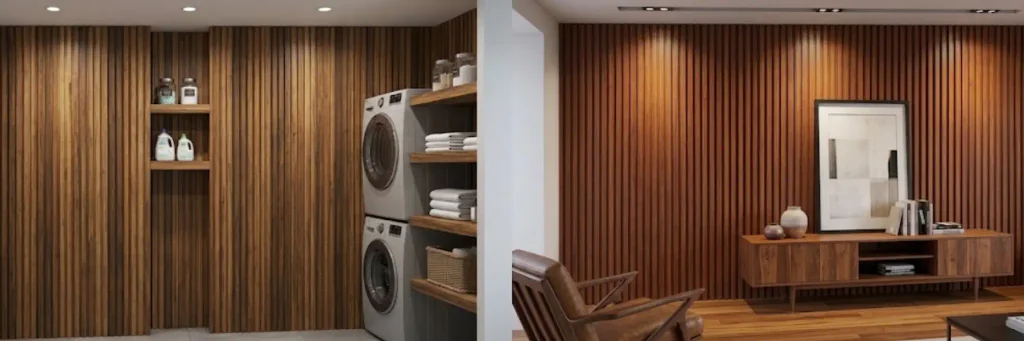
Here is a quick guide to help you decide:
- Kitchen feature wall or splashback zone – WPC. Moisture, grease, and easy cleaning make it the practical choice.
- Laundry – WPC. High humidity and regular splashing rule timber out.
- Bathroom – WPC. No moisture absorption, no mould risk.
- Living room feature wall – either. If you want natural character, go timber. If you want low maintenance, go WPC.
- Bedroom – either. Timber for warmth and acoustics, WPC for durability and zero upkeep.
- Study nook or home office – either. WPC if it backs onto a wet area or an external wall prone to condensation.
- Pantry or storage room – WPC. Termite resistance and easy cleaning are more important than aesthetics here.
- Hallway or entry – WPC. High-traffic areas benefit from a surface that resists scuffs and wipes clean.
You can browse the full wall and ceiling cladding range, including WPC indoor wall timber, acoustic wall panels, and flexible wall panels, in the Wall and Ceiling Cladding category at Hardware Heaven.
Planning a full kitchen or cabinet build alongside your wall cladding? The hardware supplies checklist covers everything from hinges to handles so nothing gets missed.
Frequently Asked Questions
Are WPC panels waterproof?
WPC panels are highly water-resistant and do not absorb moisture, but they are not rated for submersion. For wall cladding in kitchens, laundries and bathrooms, they handle splashing, steam and humidity without swelling or warping.
Do WPC wall panels fade near a window?
Modern WPC panels include UV stabilisers that significantly reduce fading. However, prolonged direct sunlight over several years can cause slight colour change. If the wall gets strong afternoon sun, consider a UV-stable finish or a lighter colour that shows change less.
Can you paint WPC panels?
You can, but most people do not need to. WPC panels come in a range of pre-finished colours and timber-look textures. If you do want to paint, lightly sand the surface first and use a primer designed for plastic or composite substrates.
Do WPC panels need to acclimatise before installation?
Yes. Leave the panels in the room where they will be installed for at least 48 hours before fitting. This lets them adjust to the ambient temperature and humidity, which reduces the risk of minor expansion or contraction after installation.