When you’re speccing edging for a cabinet job, the choice between ABS edging & Melamine Edging matters more than most people think. Pick the wrong product for a kitchen or bathroom build and you’ll be dealing with chipped, brittle edges well before the client considers any other maintenance. Both materials seal exposed board edges on particleboard and MDF, but they do it very differently.
This guide breaks down the real performance gap between ABS edging & melamine edging, which one belongs where, and what the Melbourne cabinet trade actually specifies on active builds. Whether you’re a cabinetmaker, joiner, or serious DIYer, you’ll know exactly what to order before you pick up the phone.
What Are ABS Edging and Melamine Edging?
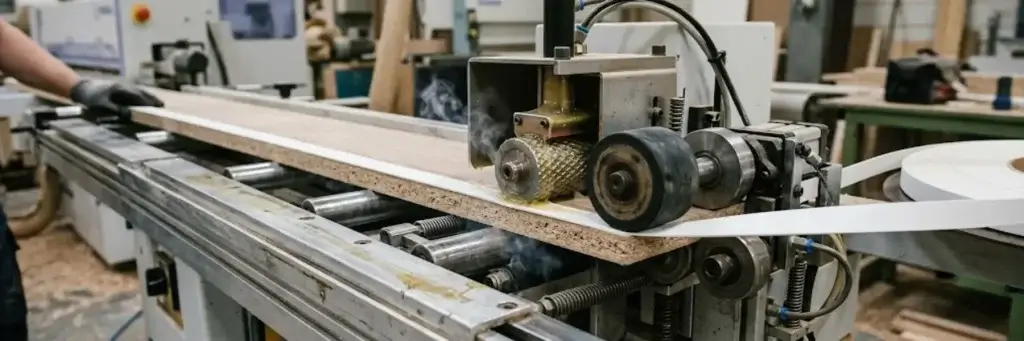
ABS edging (Acrylonitrile Butadiene Styrene) is a thermoplastic strip applied with a hot melt edge-banding machine. It runs 1mm thick and carries the same colour all the way through the material. Melamine edging is a resin-saturated paper product, typically 0.4mm thick, applied with a pre-glued iron-on method. Both seal exposed board edges, but they perform very differently under daily use.
Edge banding matters because manufactured boards like particleboard and MDF leave raw, unfinished edges when cut. Those exposed edges absorb moisture, take damage from contact, and look unfinished without a proper strip applied. The edging choice you make on the job affects how long a piece holds up and how much remedial work comes back to you later. For a comprehensive breakdown of edge banding types, PRI Edgebanding has put together a detailed industry guide.
ABS is a true thermoplastic. It flexes without cracking, bonds firmly to the substrate under heat and pressure, and maintains dimensional stability even in humid environments like kitchens and bathrooms. The solid colour through construction is a key advantage: a minor surface knock won’t reveal a pale patch beneath, which is a common failure point for surface-only finishes.
Melamine edging is a decorative paper strip impregnated with thermosetting resins. It’s the lower-cost option and suitable for enclosed shelving or cabinet backs where edges face very little contact. It’s also fast to apply on small runs because pre-glued rolls work with a standard iron. The trade-off is durability: melamine edging is thin, and that thinness becomes a liability the moment high-contact use begins.
How Does Each Type Perform on a Real Job Site?
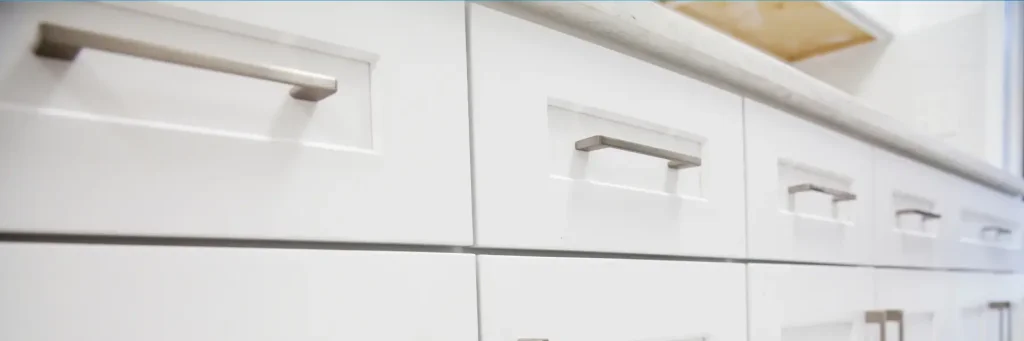
ABS edging holds up under impact, heat, and repeated cleaning. Melamine edging chips when knocked and goes brittle over time, especially near heat sources. On active job sites where cabinets are moved, stacked, and installed in stages, ABS is the practical choice. Melamine is better suited to low-contact applications where the edge won’t take direct daily use.
The difference becomes clear in kitchens. ABS has very high heat stability and won’t shrink or distort when exposed to steam from a dishwasher or kettle, which is the kind of long-term stress kitchen cabinetry faces every day. Melamine provides no comparable thermal resistance.
Installation is another factor. During a cabinet fit-out, panels get moved repeatedly, stacked against walls, and carried into tight spaces. One solid knock to a melamine edge can crack or chip it before the cabinet is even in position. ABS takes that same knock and holds without issue.
Once installed and in use, ABS resists common household cleaning products and weak acids and alkalies. Strong acids, aromatic hydrocarbons, esters, and ketones will attack ABS, but those aren’t substances found in standard kitchen cleaning routines. For routine cleaning with surface sprays, ABS poses no maintenance concern. Technical documentation from the Australian cabinet sector confirms these performance properties in real kitchen and bathroom applications (see ABS edging fact sheet).
For Melbourne cabinetmakers working on kitchen and bathroom builds, ABS is the default for exactly these reasons. The extra cost over melamine edging comes back in fewer callbacks and a finish that holds up for the long term without needing remedial work.
Which One Chips Less Over Time?
ABS chips far less than melamine over time. Melamine edging is brittle by nature. A sharp knock or repeated light contact wears through it quickly, exposing the raw particleboard or MDF core beneath. Once that substrate shows through, there’s no clean fix. ABS maintains its integrity even in high-traffic areas because the colour runs all the way through the material.
The table below compares ABS edging and melamine edging across the factors that matter most on a working build.
| Feature | ABS Edging | Melamine Edging |
|---|---|---|
| Thickness | 1mm (AU industry standard) | 0.4mm |
| Impact resistance | High | Low |
| Heat/steam resistance | High | Low |
| Chips over time? | No | Yes |
| Colour construction | Solid throughout | Surface layer only |
| Application method | Hot melt edge-banding machine | Pre-glued iron-on |
| Best for | Kitchens, bathrooms, high-traffic cabinetry | Internal shelving, enclosed carcass |
| Cost | Higher | Lower |
When ABS takes a hard knock, the solid colour throughout means the damage is often minimal and the colour stays consistent even with light scuffs. When melamine chips, the white or pale board core becomes visible immediately. Attempting a repair on chipped melamine usually means re-doing the whole edge strip.
ABS edging also carries a finishing advantage. The colour match between a 1mm ABS edge and the melamine face of a board is consistent. The edge profile looks clean and contemporary without the bulk of older 2mm products. For frameless cabinet construction, which dominates Melbourne builds, 1mm ABS is the standard finish.
Is Melamine Edging Worth Using at All?
Yes, in the right application. Melamine edging is cost-effective and fast to apply, making it a legitimate choice for enclosed shelving, cabinet backs, and any edge that won’t see regular direct contact. It’s available pre-glued on rolls, which speeds up small-volume work without requiring a banding machine. The problem is using it where only ABS edging delivers lasting results.
Melamine edging makes sense for interior shelf edges inside closed wardrobes, internal carcass edges not exposed to handling or regular cleaning, and lower-budget projects where cost control is the primary driver and the application is appropriate.
Where it doesn’t make sense is on door edges, drawer fronts, or any surface that gets opened, closed, bumped, and wiped down regularly. Melamine edging placed on those surfaces will chip. Callbacks, repair costs, and reputational damage follow, and those costs outrun the original material saving every time.
Matching the product to the application is the skill. Both melamine edging and ABS edging have their place. The failure mode is applying melamine where the job calls for ABS.
What Thickness Should You Specify for Cabinet Work?
Specify 1mm ABS for kitchen and bathroom cabinetry. That’s the current industry standard for frameless cabinet construction in Australia and gives a clean, modern edge profile without the bulkier look of 2mm. Some commercial builds step up to 2mm for table tops and desk surfaces that take heavier daily impact. For melamine edging, the standard roll runs 0.4mm, which suits low-contact applications but won’t hold where durability matters.
The 1mm ABS edge has become the Melbourne trade’s default because it balances durability, aesthetics, and machinability. It trims cleanly on an edgebander, sits flush with 16mm board thickness, and finishes with a sharp, consistent profile that works across contemporary and traditional cabinet styles.
Your starting point should always be the application. High-contact and wet-area work means 1mm ABS. Internal shelving and enclosed carcass work can use melamine to bring material costs down without compromising the result. For Melbourne builders sourcing both, Hardware Heaven carries the cabinet hardware supplies Melbourne trade professionals rely on.
Frequently Asked Questions
Can you use melamine edging on kitchen cabinets?
You can, but most trade professionals won’t recommend it for doors, drawer fronts, or any edge that gets regular daily contact. Melamine edging chips easily in high-use areas and degrades over time near heat and moisture. ABS edging is the industry standard for kitchen cabinet work across Australia because it handles daily impact, cleaning products, and humidity without chipping or deteriorating over years of use.
How do you apply ABS edging?
ABS edging needs a hot melt edge-banding machine that bonds the strip under heat and roller pressure. A proper edgebander delivers the most consistent results, especially for production runs. For smaller quantities, a designated banding iron works well. Most ABS edging comes unglued on a roll so the machine applies adhesive during the process. Pre-glued ABS is also available and suits low-volume applications where a full machine isn’t practical.
Is ABS edging better than PVC edging?
Both are durable plastic edgings with similar performance across most applications. ABS is generally more impact-resistant, while PVC offers slightly more flexibility. ABS is also considered more eco-friendly because it doesn’t produce toxic chemicals during incineration and is fully recyclable. Many trade specifiers choose ABS for kitchen and commercial cabinetry for both performance and environmental reasons.
Can melamine edging be repaired if it chips?
A chipped melamine edge is difficult to repair cleanly because the material is thin and brittle. Once the surface layer breaks, the raw particleboard or MDF core shows through. Colour-matched touch-up products exist but rarely produce a convincing colour match on melamine edges. In most cases, the only proper fix is replacing the full strip. This is a key reason cabinetmakers choose ABS for any high-contact edge from the start.
What edging do cabinetmakers in Melbourne typically use?
The Melbourne cabinet trade has largely moved to 1mm ABS edging as the standard for frameless cabinet construction. It handles the daily demands of kitchen and bathroom environments and gives a clean, modern profile that suits contemporary design. Melamine edging still has its place for internal shelving and lower-contact carcass work. Most cabinet hardware suppliers in Melbourne stock both products so builders can spec each correctly across a single project.
ABS edging wins on durability. Melamine edging wins on cost. The decision comes down to where the edge is going and what it’ll face day to day. For kitchens, bathrooms, and any cabinetry that gets used hard, ABS is the right call. For internal shelving and low-contact carcass work, melamine gets the job done at a lower price point.
Hardware Heaven stocks a full range of cabinet hardware supplies, boards, and edging products for cabinetmakers and joiners across Melbourne. We carry trusted brands and keep popular lines ready for quick pick-up or fast dispatch from our Truganina store.
Talk to the Hardware Heaven team today. Call (03) 9968 9991, email info@hardwareheaven.net.au, or check our current trade promotions for the latest stock and pricing.