We’ve lost count of how many people walk into the shop holding a single hinge in a sandwich bag, convinced it’s a simple job, then spend ten minutes on the phone to their partner trying to describe what it looks like. Full overlay, half overlay, inset, the words sound made up until you actually need one. And the internet doesn’t help much either. Search “how to install cabinet hinges” and you’ll find a dozen forum threads where someone’s posted a blurry photo asking the same question you’ve got, usually with three conflicting answers underneath it.
Here’s the thing: you don’t need to know the industry jargon. You just need to look at your own door for about thirty seconds, and we’ll walk you through exactly what to check.
How to Identify Overlay, Half-overlay or Inset From Your Existing Door
Overlay refers to how much of the cabinet frame or opening your door covers when closed. It’s the biggest factor in choosing the right hinge, and you can measure it in under a minute:
- Full overlay — the door covers the opening almost entirely, with only a small gap between adjacent doors. Common in modern frameless kitchens.
- Half overlay — the door covers roughly half the width of a centre partition, used where two doors share one internal divider.
- Inset — the door sits flush inside the opening, so the cabinet frame is visible all the way round when closed.
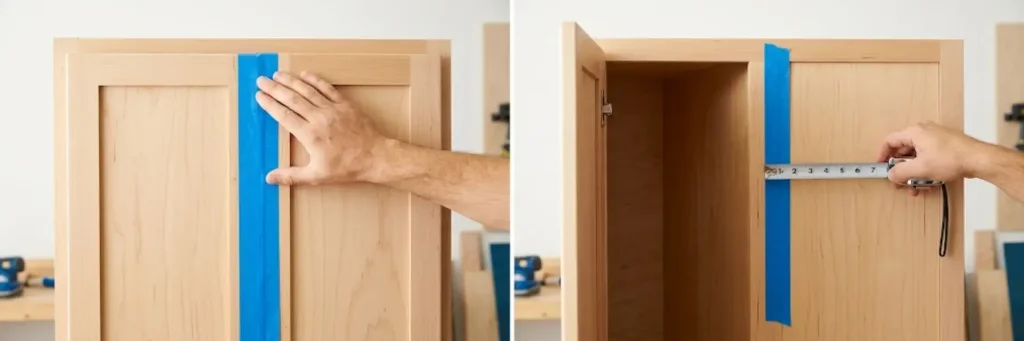
To measure your own door, close it and run a strip of masking tape vertically across the join between door and frame. Open the door and measure how far the tape extends onto the frame. That distance is your overlay measurement, and it’s what any hinge box or trade counter will ask for first.
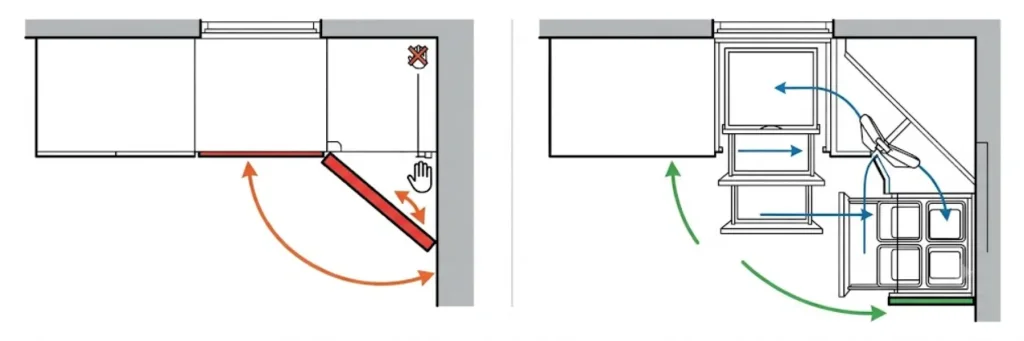
Measuring The Opening Angle Before You Buy
Opening angle matters more than most DIYers expect, particularly in corner cabinets or anywhere a door needs to clear an adjacent handle, appliance, or wall. Standard hinges open to 100 to 110 degrees, suiting most straight runs. Wide-angle hinges open to 165 or 170 degrees and are worth the extra cost if your door needs to swing well clear of a neighbouring cabinet, drawer, or bin.
Before buying, open the existing door as far as it goes and check what it clears. If it’s binding on a handle or an adjacent door, a wider-angle hinge is usually the fix, not a different overlay.
Matching Hinge Cup Size: 26mm vs 35mm
Almost every modern kitchen cabinet uses a 35mm cup hinge. It’s been the industry standard since Blum introduced it decades ago, and it’s what you’ll find on the vast majority of Australian kitchen, bathroom, and wardrobe doors built from the 1990s onward.
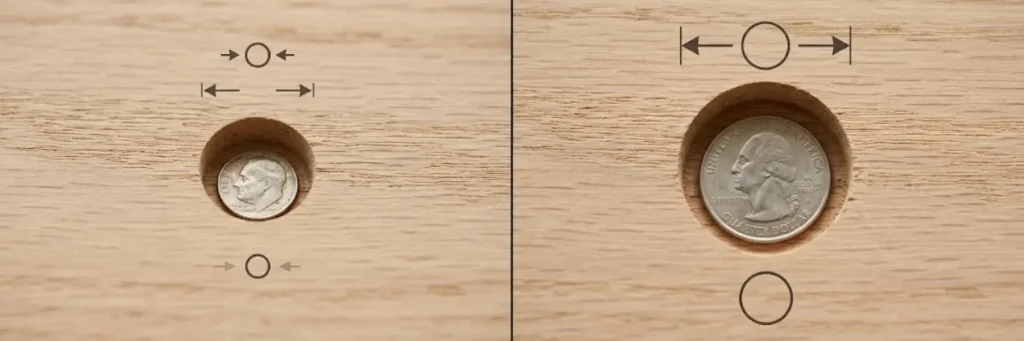
A smaller 26mm cup, sometimes called a mini hinge, turns up on lighter, thinner doors, often in older bedroom furniture or compact bathroom cabinetry. If you’re replacing a hinge, hold a coin against the existing cup hole. A 35mm hole is noticeably wider than a $2 coin; closer to a 20-cent piece usually means a 26mm system, and a standard 35mm replacement won’t seat properly. Measure the hole diameter directly rather than guessing from the hinge itself, since the visible dome can look similar across both sizes. If you’re already replacing hinges on a full drawer bank, it’s often worth checking the runners at the same time, our Hafele Matrix Box range is a common upgrade for anyone touching a drawer front anyway.
When Corner or Bi-fold Hinges Are Needed
Standard hinges aren’t designed for every layout. Corner cabinets with a door opening from an angled or blind corner need a specific corner hinge, and bi-fold or two-door corner systems need a hinge that joins two doors together before the pair attaches to the frame. Forcing a standard hinge into either application usually ends with a door that won’t sit flush or catches on the neighbouring panel.
Soft-close vs Standard: What DIYers Actually Notice
Soft-close hinges use a hydraulic damper in the last part of the swing so the door settles rather than slams. For a kitchen or wardrobe in daily use, most people notice the difference within the first week, particularly in a busy household. Standard hinges are lighter on the wallet and perfectly adequate for low-traffic cabinets like a laundry cupboard. If you’re only upgrading a handful of doors, prioritise the ones nearest the kitchen bench or wardrobe entry, since that’s where the soft-close feel is noticed most. It’s also a good moment to sort out what’s behind the door, a cutlery tray is an easy add while the drawer front is already out.
Common Mistake: Buying Hinges That Don’t Match Hole Spacing
The most frequent error we see isn’t overlay or cup size, it’s hole spacing on the mounting plate side. Two hinges can both use a correct 35mm cup and still fail to line up if the screw holes on the plate sit at a different spacing to what’s already drilled into your cabinet. Before buying in bulk, fit one hinge and mounting plate as a test, check the door sits flush and swings cleanly, then order the rest.
If you’re fitting new cup holes rather than matching an old pattern, a sharp 12-piece flat wood drill bit set with a proper Forstner bit gives a cleaner 35mm cup than a standard twist bit.
Small Wins While You’re Already In There
Once a cabinet door is off its hinges, it’s the easiest point to tackle a couple of other jobs you might have been putting off:
- Level up a wobbly base cabinet with an adjustable leg and glide set rather than shimming it with offcuts
- Add a strip of Häfele Loox5 LED lighting inside if the cabinet is dark to work in
Neither is essential to a hinge swap, but they’re the kind of small upgrade that’s far easier to do now than to come back to later.
Before You Start Cutting
A few things worth checking against your cabinet before you order anything:
- Confirm overlay type with the masking tape method above
- Measure the existing cup hole diameter rather than assuming 35mm
- Check opening angle clearance on corner and adjacent doors
- Decide soft-close vs standard per door, not for the whole kitchen
- Test-fit one hinge before ordering the full quantity
Hinges are one of those jobs where a second opinion saves a second trip. If you’re ever unsure which overlay or cup size you’re looking at, bring a photo or the old hinge into our Truganina counter and we’ll talk it through with you, no obligation, just a straight answer so you order the right thing once.
Ready to get it right the first time? Bring your old hinge or a quick photo into our Truganina counter, or browse the current range at Hardware Heaven and we’ll help you match it before you buy.
Frequently Asked Questions
How do I know if my cabinet door is full overlay or half overlay?
Close the door, run masking tape across the join with the frame, then open it and measure how far the tape extends onto the frame. That distance is your overlay measurement.
Can I use a 35mm hinge if my old cabinet has a 26mm cup?
No. A 35mm cup hinge won’t seat properly in a 26mm hole. Measure the existing cup diameter directly, or compare it against a coin, before ordering replacements.
Do I need special hinges for corner cabinets?
Yes, in most cases. Blind or angled corner doors typically need a dedicated corner or bi-fold hinge, since a standard hinge won’t let the door clear the adjacent panel properly.