Ask any cabinet maker how a job actually goes off the rails, and it’s rarely the joinery itself. It’s the run back out for edge tape that doesn’t quite match, the hinge that’s on backorder at one supplier but in stock at another, or the drawer runner that turns a one-day install into two. Sourcing cabinet hardware supplies Melbourne wide from three or four different counters costs more in fuel and downtime than most quotes ever account for. Here’s how one pickup, done properly, actually plays out on a real job, and where each product on the list earns its place.
What to Load Into the Ute Before You Start
Before boards even leave the yard, a well-stocked pickup for a standard kitchen or wardrobe job usually includes:
- Melamine or MDF board, cut or full sheet, plus matching edge tape
- Soft-close hinges sized to your overlay
- Handles in the CTC spacing your drawing calls for
- A drawer system, such as the Häfele Matrix Box, if the job needs a full soft-close upgrade rather than a basic runner
- Fasteners, adhesive and a spare pack of abrasive discs, the small stuff that’s easy to forget until you’re at the bench
Getting all of it from one counter means the finish, size and stock availability are confirmed once, not four separate times.
Step One: Get the Board and Edging Matched Before You Cut
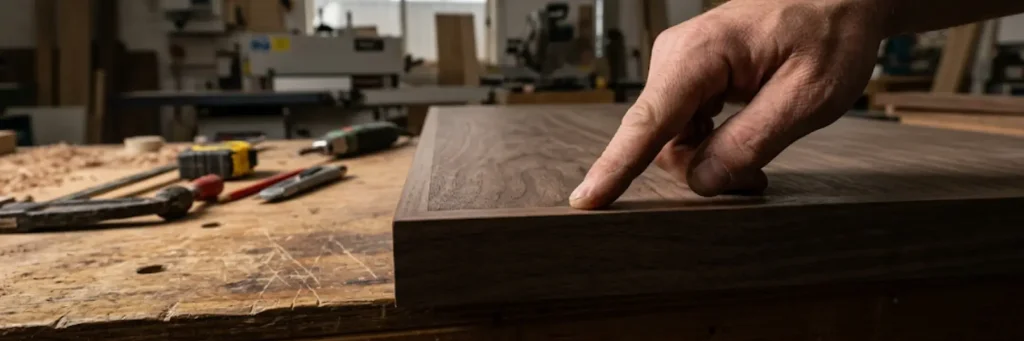
Edge banding is where jobs get let down by a detail that’s easy to overlook: tape thickness. Matching tape colour to board is the obvious step, but matching tape thickness to the board’s decorative layer matters just as much. Too thin, and the seam shows a faint line under raking light. Too thick, and the edge sits proud, catching on a cloth or a sleeve every time someone wipes the bench.
The trade-literate way to check it before you commit a whole run: run a fingernail across a trimmed test seam. If you can feel a step, the thickness is off, even if it looks fine to the eye. This is the advantage of pulling board and edging from the same counter rather than two suppliers, you can hold both against each other before you buy either.
Step Two: Fit the Hinges Before the Handles
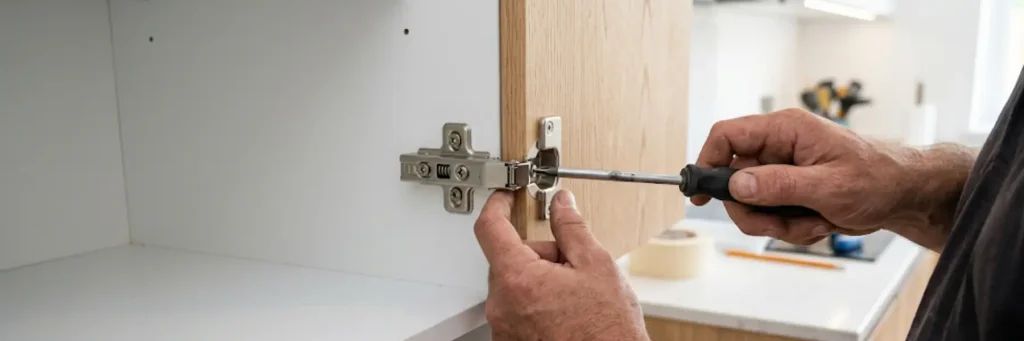
It’s tempting to fit handles first because they’re the visible, satisfying part of the job. Do hinges first instead. A soft-close hinge needs to be set and adjusted (in, out, up, down) before the door hangs true, and it’s far easier to fine-tune that adjustment on a door with no handle in the way. Budget about ten to fifteen minutes per door for fitting and adjustment if you’re doing it properly rather than rushing the alignment.
Step Three: Handles, Matched to Spec Not Guesswork
Once the doors are hanging correctly, handles go on last. If you’re working from an existing spacing rather than a fresh drawing, measure centre-to-centre (CTC) on the old handle before ordering. Most Melbourne project-home and joinery jobs use 96mm, 128mm or 160mm spacing. Ordering the wrong CTC is the single biggest cause of on-site delays, because it usually means a same-day exchange rather than a straight fit.
Step Four: Drawers, Where the Job Either Feels Premium or Doesn’t
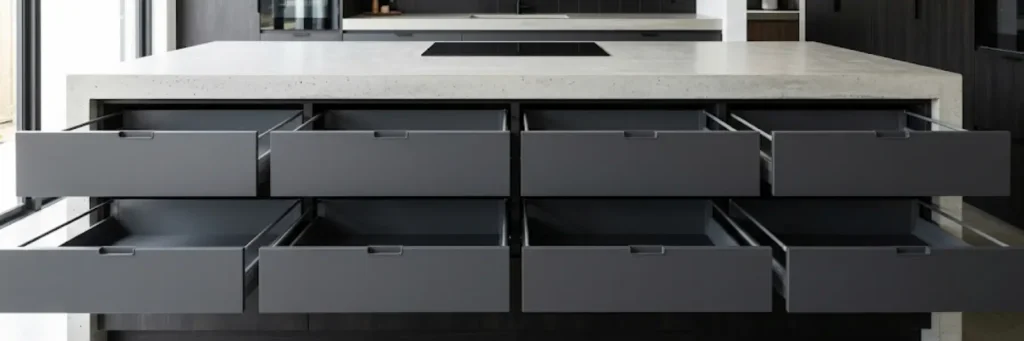
Runners are the upgrade with the biggest gap between effort and client-perceived value. A basic, non-soft-close runner makes even a beautifully finished drawer front feel like an afterthought. For jobs where the brief calls for a genuine soft-close feel rather than just a smoother slide, the Häfele Matrix Box system is worth quoting as a full drawer replacement rather than a runner-only swap. It’s a bigger line item, but it’s the one clients notice and mention back to you weeks later.
The Real Cost of the Second Trip
A few things tend to trigger an extra trip mid-job:
- Edge tape ordered in the wrong colour or thickness for the board batch
- Hinges out of stock at the board supplier, so a second stop is unavoidable
- Handles arriving in the wrong CTC spacing, needing a same-day exchange
- Drawer runner stock that’s a generation behind what the job spec calls for
None of these are big mistakes on their own. Together, across a busy month, they’re the difference between a profitable job and a break-even one, which is exactly why sourcing cabinet makers hardware supplies from one counter matters more than it sounds like it should.
A Local Note for Melbourne’s West
West Melbourne has a genuinely large cabinet-making and joinery trade to serve. There are 332 joinery and cabinet-making businesses registered in West Melbourne alone on Houzz, part of a much wider Melbourne-wide trade of over a thousand registered operators. Hardware Heaven sits inside that cluster, based in Truganina, close to the Truganina Employment Precinct, an area council planning documents earmark to deliver between 10,000 and 15,000 new jobs as it builds out.
For a cabinet maker working across Truganina, Tarneit, Point Cook or Werribee, that local density means same-day pickup rather than a freight wait, and hardware supplies that are stocked with trade volume in mind, not just retail quantities.
Ready to Set Up a Trade Account?
If you’re running regular jobs rather than a one-off project, a trade account is worth setting up before your next big order lands. It gives you bulk pricing on boards, edging and hardware together, plus faster pickup once your details are on file. Browse the current range at Hardware Heaven to see what’s in stock, check current promotions for bundle pricing on hardware and board runs, or get in touch with the team to talk through a trade account application. For more on getting the finish and sizing right the first time, our hardware supplies checklist cover ground this article doesn’t have room for.
Frequently Asked Questions
Should I fit hinges or handles first?
Hinges first. Doors need to be hung and adjusted before a handle is fitted, and it’s much easier to fine-tune hinge alignment without a handle in the way.
Can I buy boards, edging and hardware together in one order?
Yes. Hardware Heaven stocks board, edging, hinges, handles and drawer runners together, so a single order can cover a whole job rather than being split across suppliers.
How do I know if edge tape thickness matches my board?
Run a fingernail across the trimmed seam. If you feel a step rather than a smooth line, the tape thickness doesn’t match the board’s decorative layer.